Data-driven Personas for better targeting
Personas Business Intelligence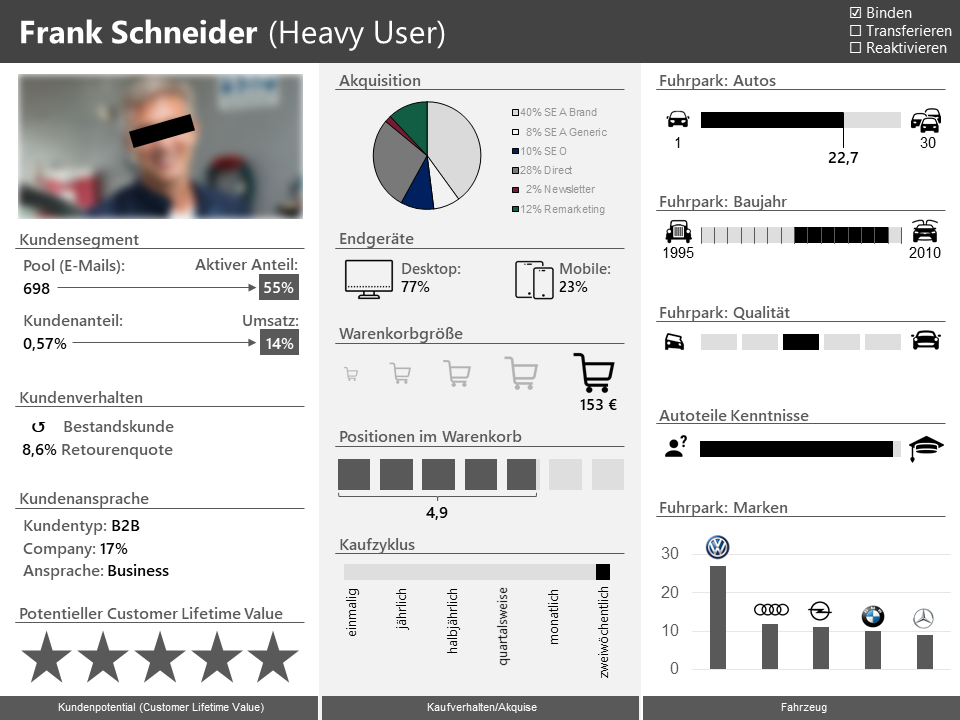
Our "Heavy User" persona
Abstract: This was for an online shop for car parts. We had a customer database of about 400 000 users but didn't have a way to make use of it.
That's when we started to look into actionable personas that could be perfectly targeted based on their metadata. This was a fun project about personas as they usually tend to be not used very frequently. Here I tried to make them understandable without much text and only show data that could be acted upon.
The challenge
So far, the metadata was just collected and nobody took the time to make sense of what was there. So together with a data analyst I started to see what kind of metadata would be interesting in order to target users.
In the end we would ideally have something to hand over to marketing so they could adjust their email strategy to speak to certain groups separately.
But the big question and the biggest challenge here was that we didn't know what data to use at first.
The process
Before we started making the personas, we tried to see what the database could give us. Once we found enough differentiating characteristics, I started to see how to map that out in a persona.
Actionable UX personas
I'm not the biggest fan of personas. I've seen a lot of them and most of them have traits that are somewhat irrelevant to designing the interface or the UX. I don't need for every persona a back story - what would it actually tell you? "Two kids and happily married" could make sense for a certain product that maybe deals with family planning or insurance things maybe.
But most of the time these things don't have any value. So, I try to find characteristics that matter to the people handling the personas. This was a car part dealership so knowing how many cars a customer has was quite important. It would help you make assumptions about maybe the frequency they bought something or if they were buying for themselves or a bigger shop.
Also, I'd like to keep it short - one printed page and not more. If it is more then it is too much. Even one page is a lot - so for this project we divided the persona into three features:
- Customer Potential/Customer Lifetime Value
- Buying Behavior/Acquisition
- Car Details
In the end we created six personas that could be differentiated based on different criteria. In order to help everyone, see the crucial differences we added a few sticky notes on them to highlight significant points.
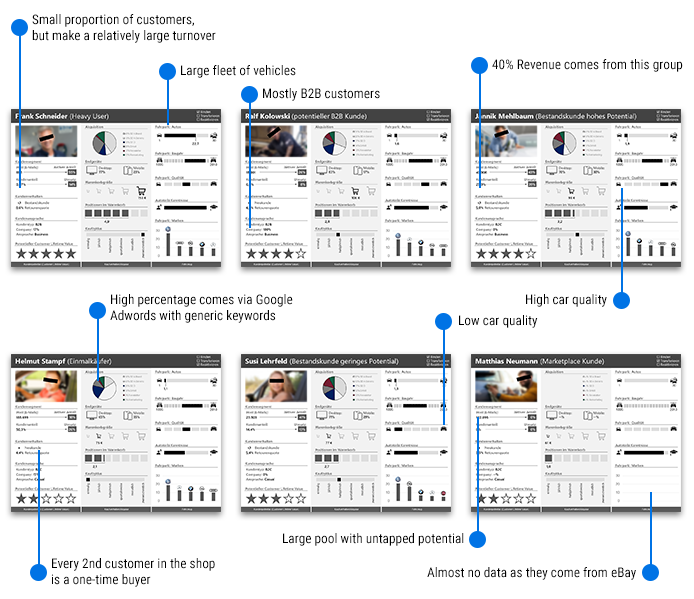
All personas with highlights about differences and what to watch out for
The six personas were all somewhat connected as the goal was to move certain customers from one persona type into the next one. For example, the marketplace customer didn't really know the brand yet as they just bought from eBay. This was a chance to promote our webpage to them for their next purchase.
The results
In the end we created quite usable personas and placed them prominently in the company. In addition, we organized a few workshops for ideating ways to utilize the personas and create targeted marketing.
In the end we successfully deployed a few targeted messages and could see the following successes:
- Strengthened the customer loyalty (this was measured in an increased shopping cart size)
- Reactivation of customers (increased buying frequency)
- Bringing more customers over from 3rd party marketplaces
The following personas were created:
The "Heavy User"
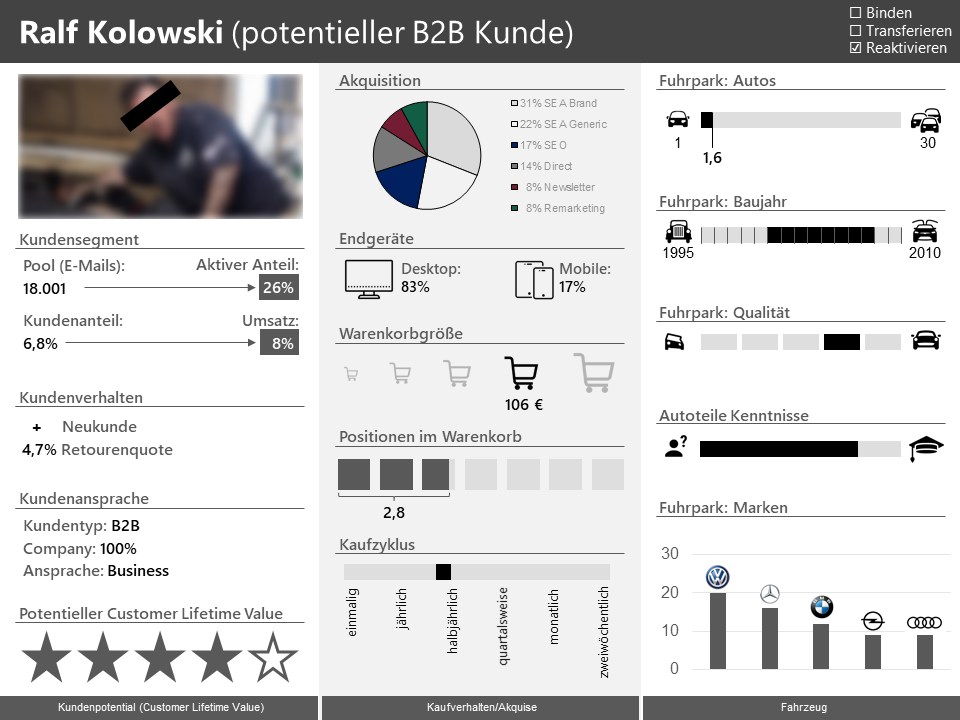
The "Potential B2B customer"
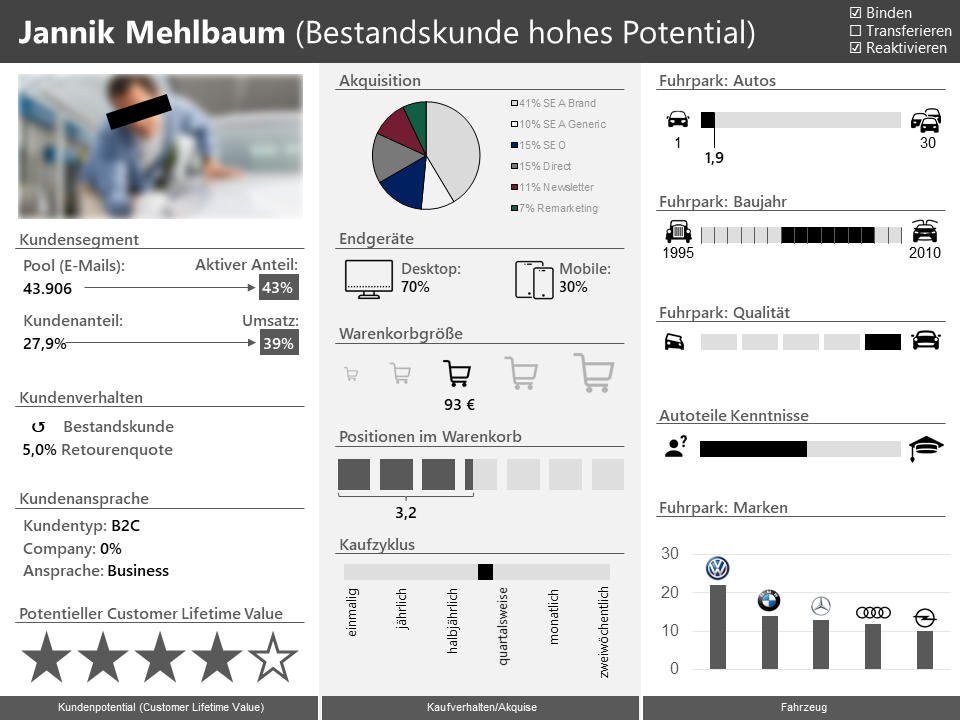
The "Existing high potential customer"
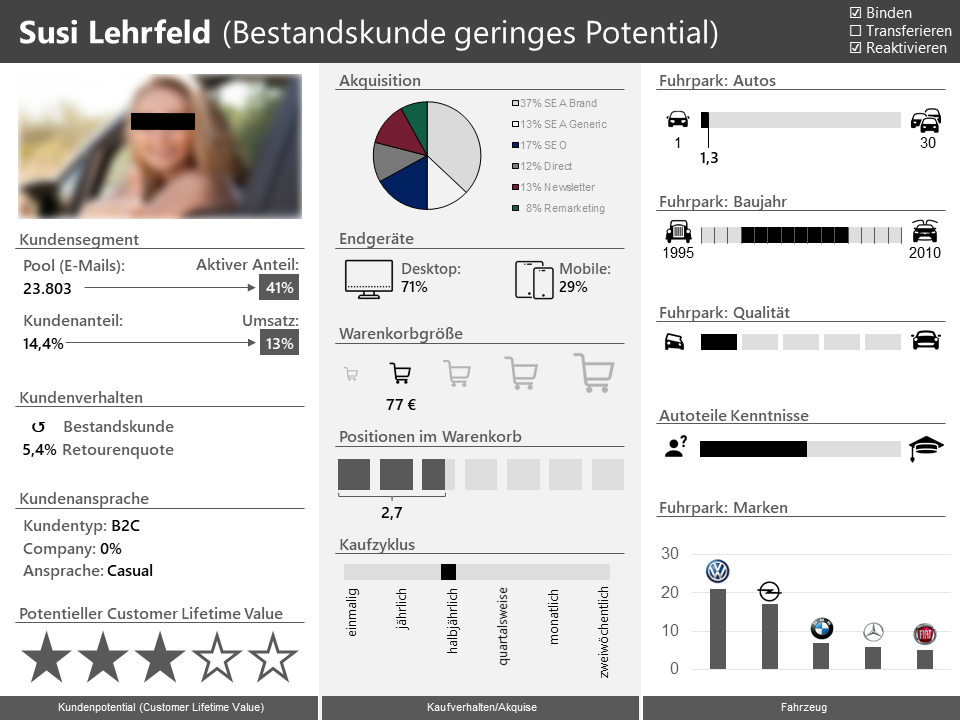
The "Existing low potential customer"
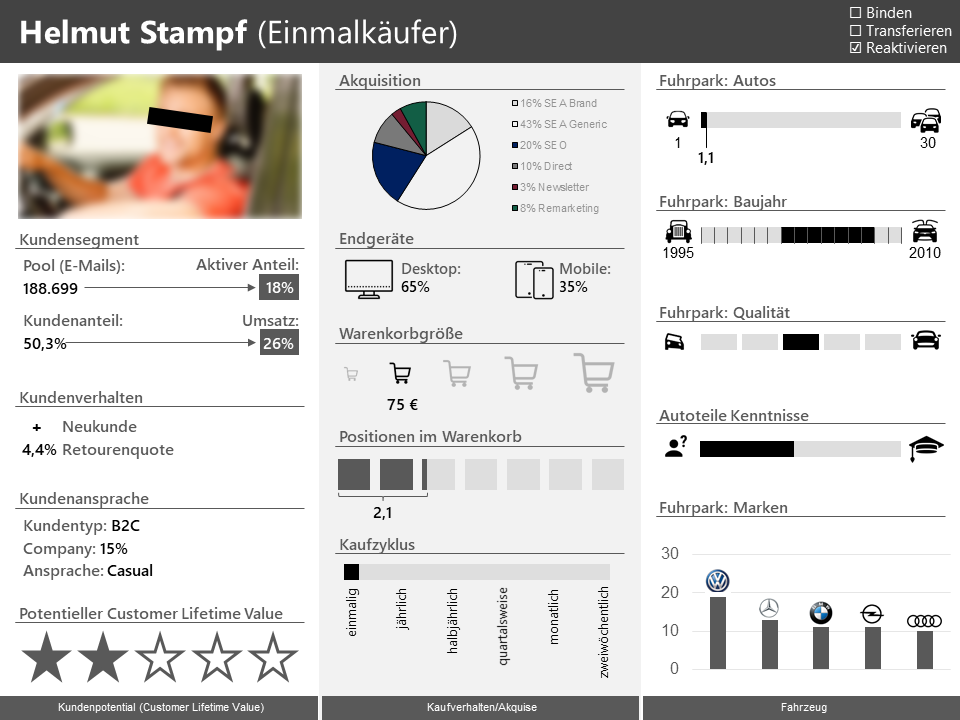
The "One time buyer"
Example of persona from other projects
Not every persona is the same. In another project we created rather high level but for our tasks actionable personas. I won't go into detail here, this is just for demostration purposes of other variants of personas.
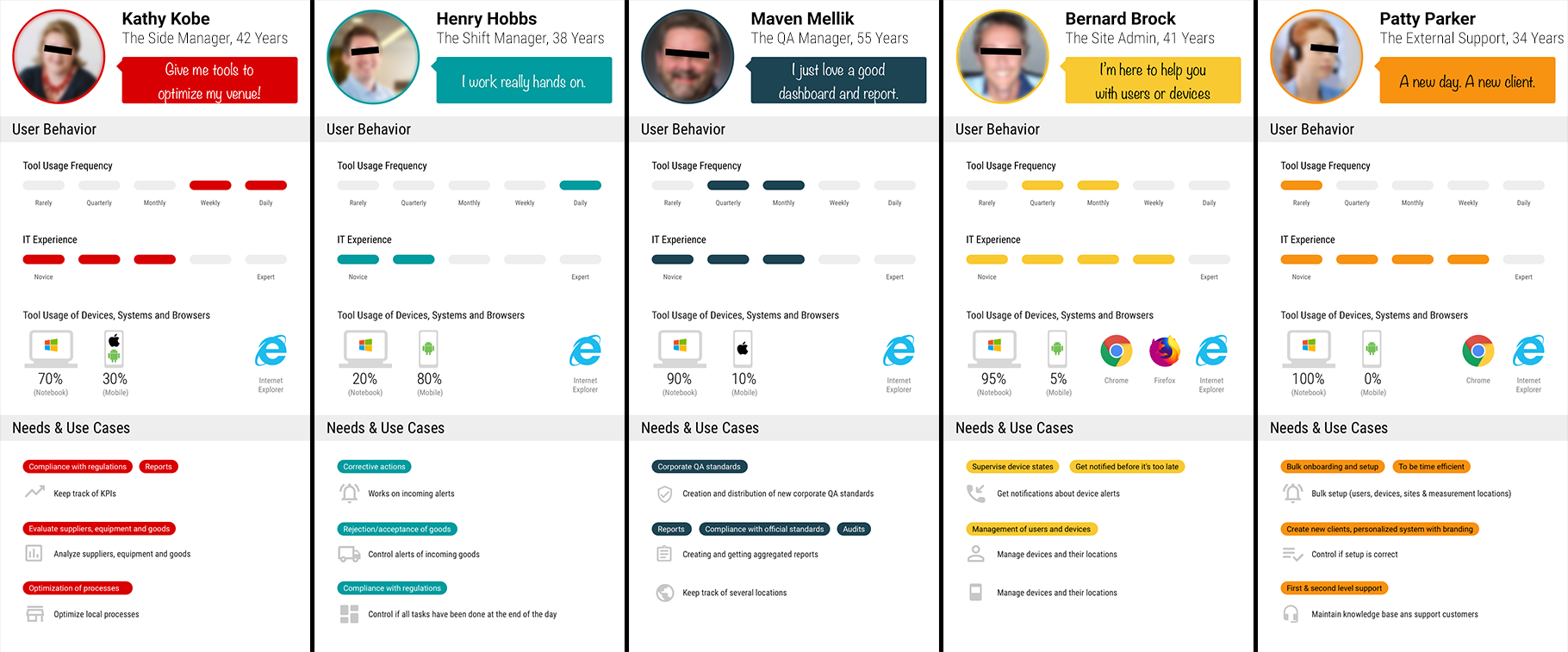
Click to open in new window.
Once you have personas the next task is identifying their pain points and touch points with your product. The following is a high level example highlighting the most important part of the user journey that is rather painful to use currently and almost used daily.
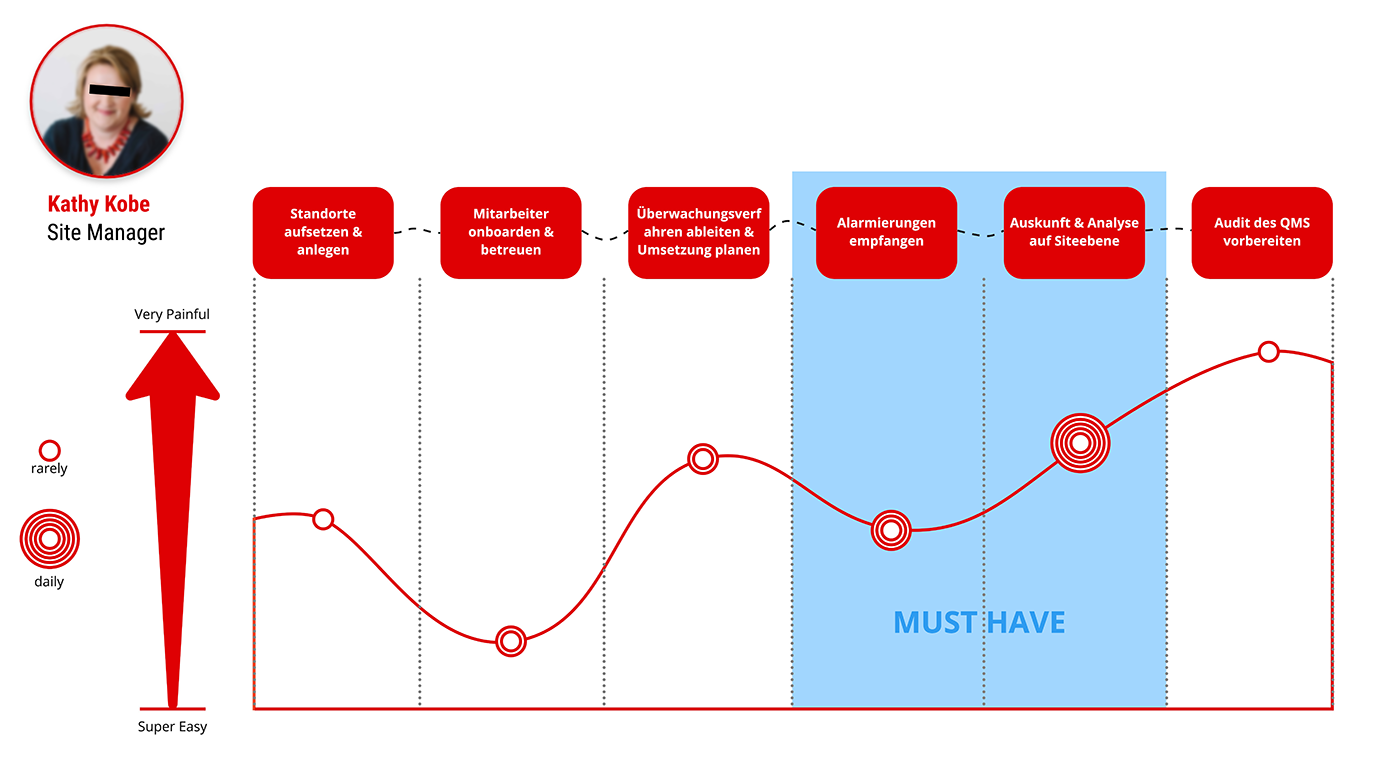
A high level user journey helping to identify usage frequency and pain points.